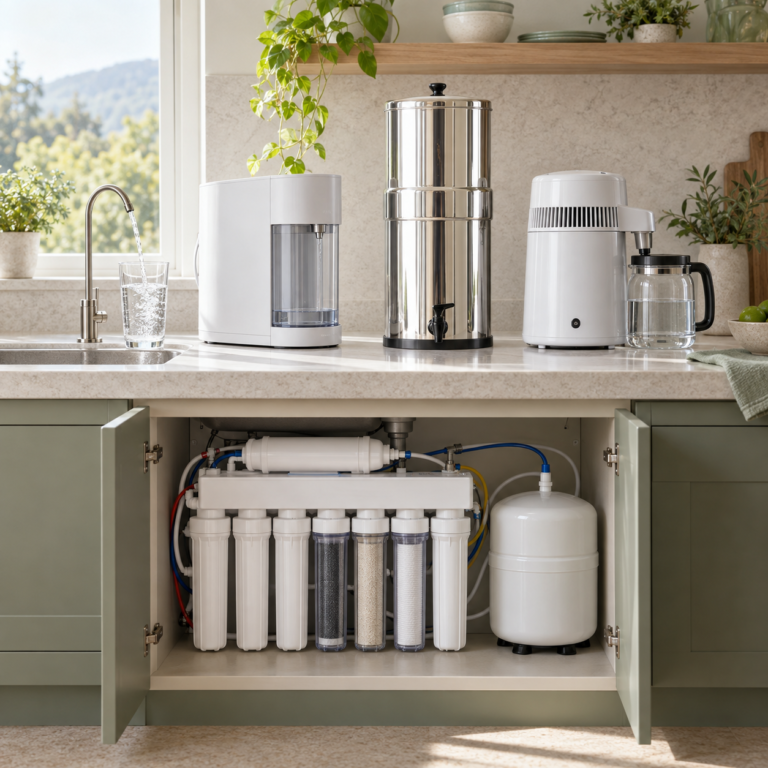
The need for water purification
We take tap water for granted and rarely question its quality. We’ve grown up with it and are told it’s safe. Which is true, but how true?
These are what’s added to our water:
- Chlorine
- Fluoride
- Aluminium salts and, in soft water areas, orthophosphate.
These are pollution concerns:
- PFAS (forever chemicals)
- Lead and copper
- Nitrates and pesticides
- Microplastics
Councils and disclosure: In England and Wales, water quality is the responsibility of the water companies, and they do publish test results. Most have a postcode checker, and the Drinking Water Inspectorate publishes compliance data. The stronger and more accurate point is that testing only covers a list of regulated substances. Anything outside that list, such as many hormones and other emerging contaminants, isn’t routinely tested for or reported, so you can’t see what’s in your water.
Through modern industry, agriculture, plus the state of our water companies releasing sewage and the poor running of the system, which we are reading about a lot at the moment, you can imagine what’s possible.
A TDS reading (Total Dissolved Solids) shows dissolved substances, including minerals, but doesn’t tell you which contaminants are present.
I also do not like the added fluoridation in our tap water, as fluoride is in many foods and occurs naturally; having too much in our diets can cause health issues, so the filters I’ve chosen include fluoride filtering.
I personally started drinking bottled water in the 90s after the tap water started tasting so bad to me that I had to change. Since then, home filtering has become much more accessible, with many companies selling their own brands, and it can be overwhelming. Certain brands I stay away from, as you can be tied into their short lifespan and pricey filters.
There are a few different filter styles on the market to consider as you make your choice. I’ll start with the very basic ones and work up to the more complex ones.
Water jug pitchers
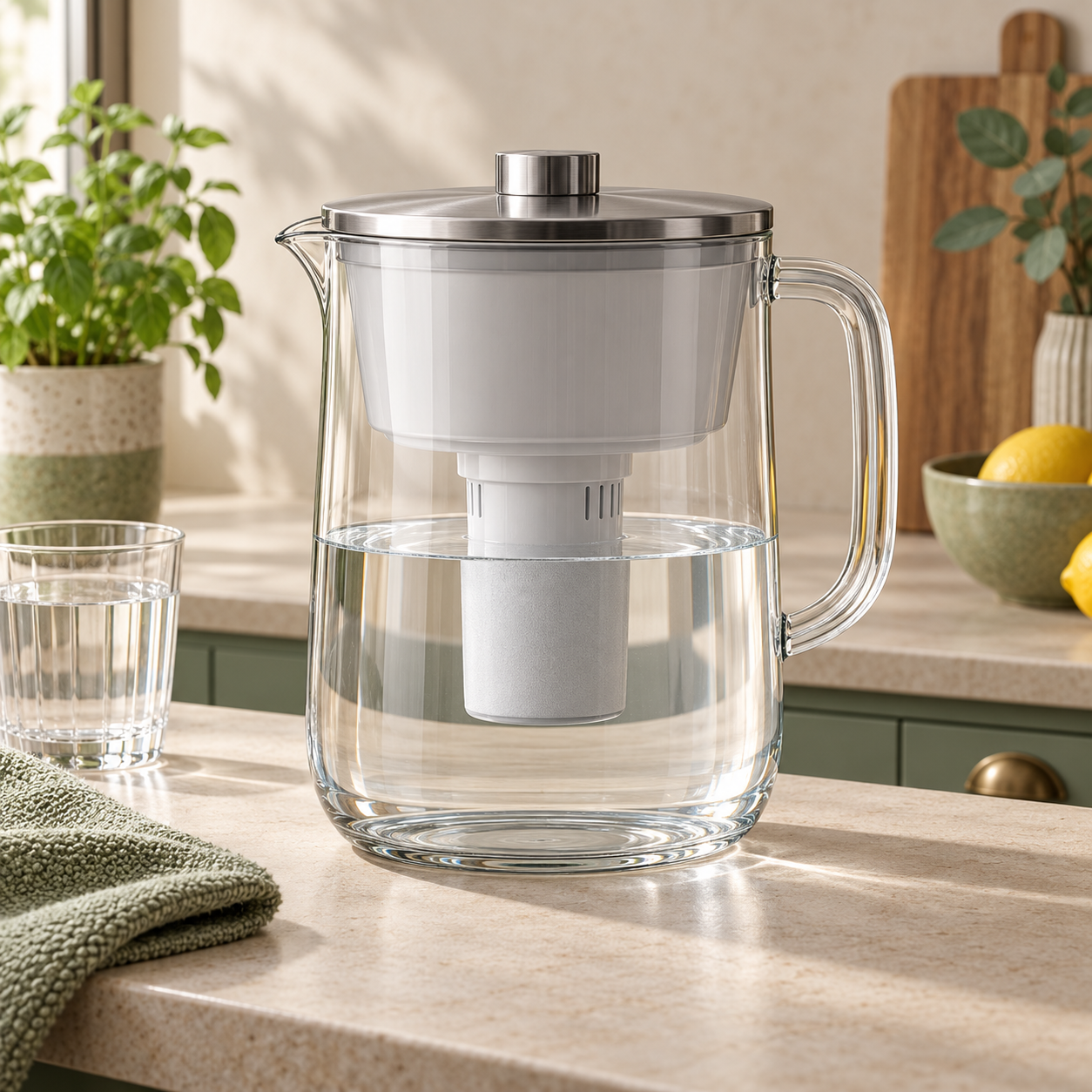
These are the most basic and just involve an activated carbon filter. They’re cheaper to buy, easy to maintain and, being just one filter to replace, the cheapest to run. But your water isn’t filtered as thoroughly as with RO or distillers, and that’s by design, as granular filters would take a very long time to do this.
Yes, they will reduce chlorine and some heavy metals, but not always fluoride, and other contaminants take more time to be filtered out. Some of the most popular filters don’t remove fluoride because they still consider it good (which I don’t agree with, but that’s personal opinion), in line with government guidelines.
With all these jugs, water tastes better. These jugs will definitely improve the taste of water. It’s a trade-off with simplicity and effectiveness with a lot of these systems.
Recently I’ve noticed a few new companies making glass, stainless steel and other non-plastic materials that use filter granules instead of the plastic filters we are used to; everything I’ve read about them is very positive. I’ve always disliked the plastic filter waste, and while some companies offer recycling, it’s not easy to find, and most filters end up in the bin.
I’ll add two of these non-plastic filter systems I really like in the jugs section.
Gravity filters
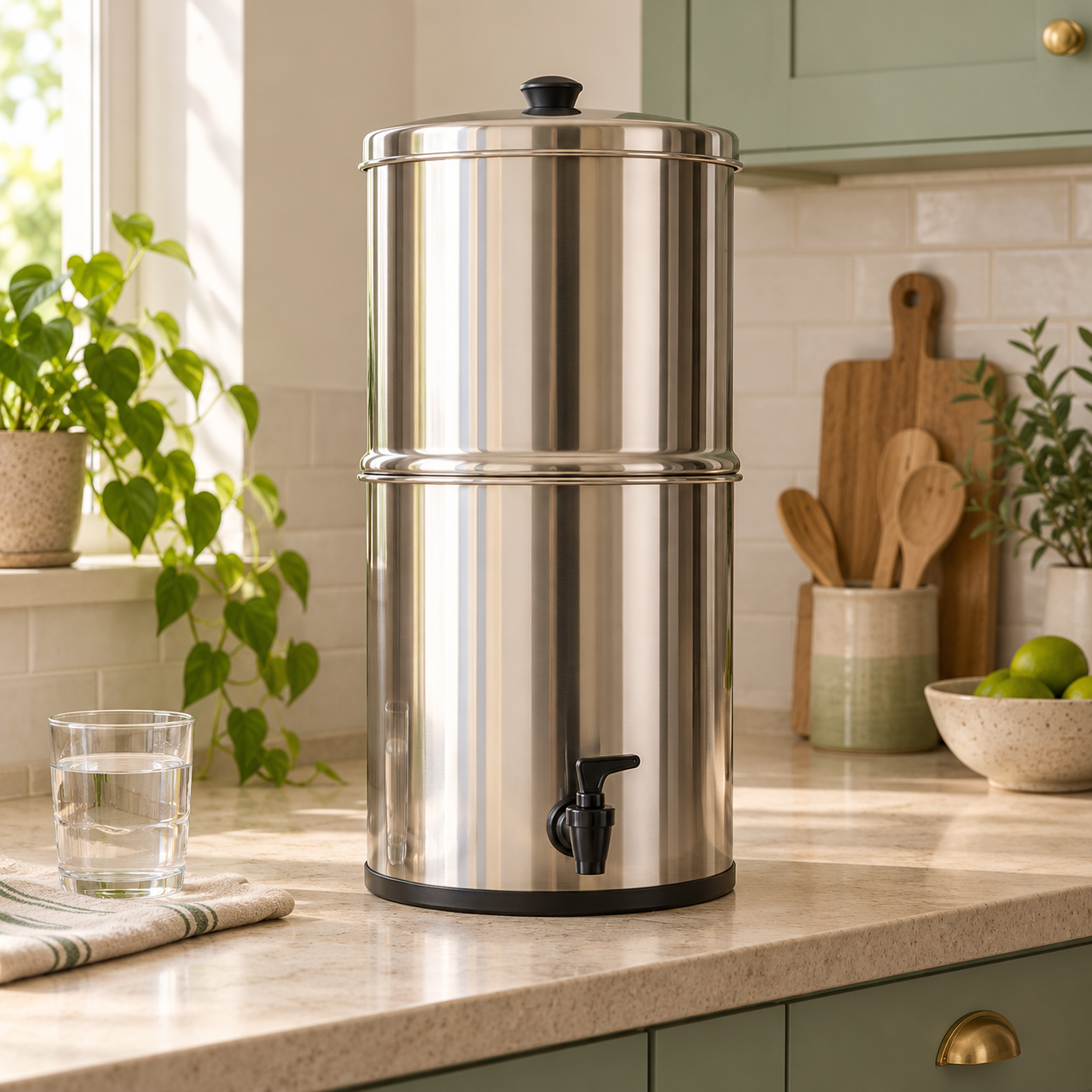
These water filters are big versions of pitchers. They work the same way but have bigger filters and filter better.
They use ceramic and additional carbon filters. What they reduce, and by how much, depends on the particular filter.
These are easy to maintain. A bit pricier to buy; the cost is higher (anywhere between £80 and £220, depending on make and size). You get the best bang for your buck with these filters on the gravity systems , as they can last up to two years with certain makes (depending on your water supply’s condition, as in if it’s heavily polluted).
The builds on these filters are metal (so no plastic, another win) and will last you for many years, up to a lifetime with the more expensive Berkeys, as you can replace seals. Some replacement cartridges may fit a cheaper model, but check compatibility with your system first. Being steel, the prices on different makes aren’t wildly different.
Under-counter filters
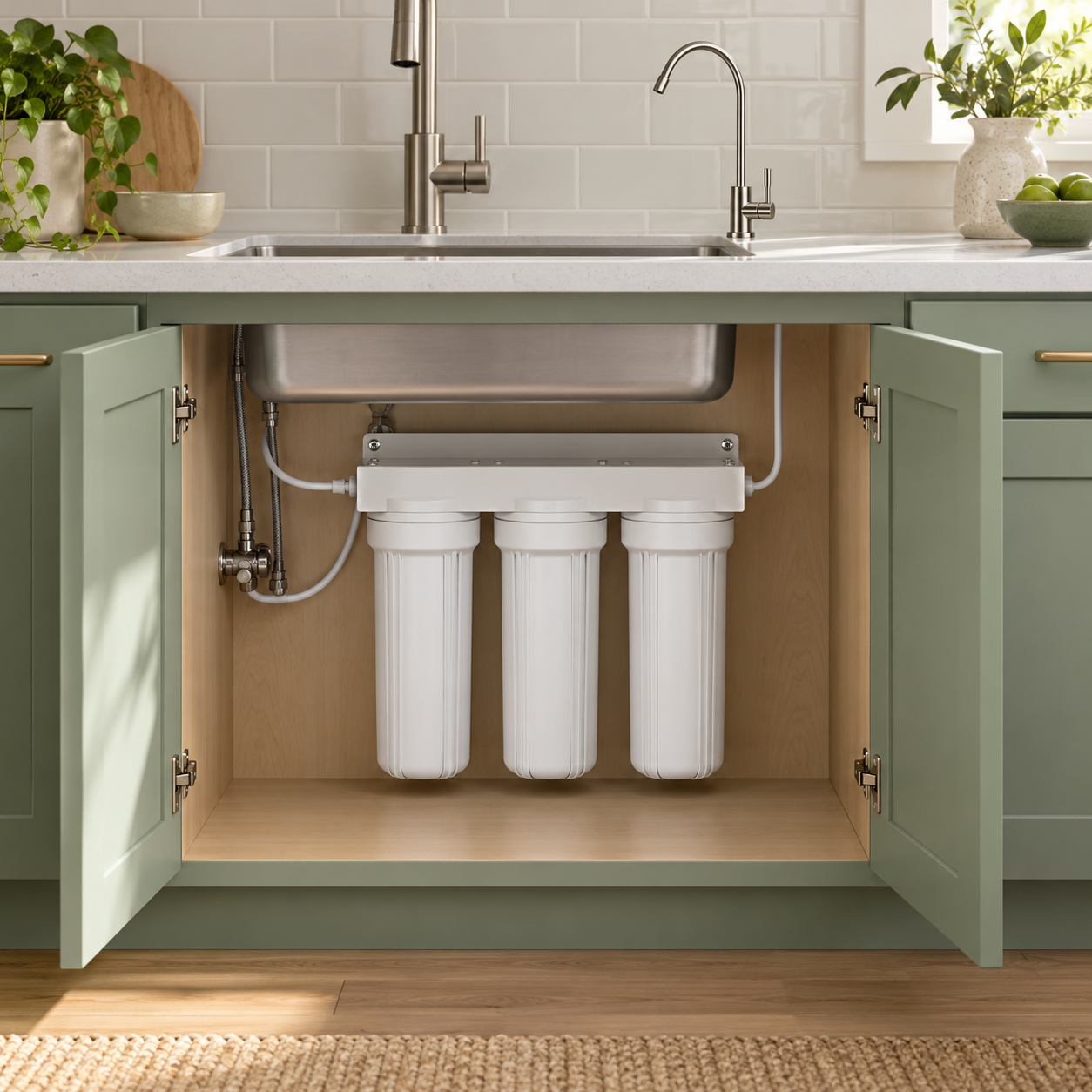
These sit under the sink.
They can range from a basic stand-alone carbon filter, very cheap and cheerful, and do the same as the jug but with no filling up: on demand, just a bit of tinkering under the sink.
Most come with instructions for easy connection to the cold water. The hardest bit is putting the small tap in the corner of the sink if it needs drilling like my cheap council sink. Some sinks have a bung you can pull out just for these taps, maybe through the counter itself. The 5- to 7-stage filters sometimes come assembled. Check to see; if not, be prepared. Home enthusiasts and people with aquariums use these setups, as I think for a home are the best, and the filters are widely available, and you can build your own system of filters, add pumps, and whatever you need. But it’s not for everyone; you can buy desktop versions of these, but I haven’t found any on Amazon so far that have a reliable filter-replacement deal for the model.
Other variations include two- or three-filter systems, with sediment, carbon, and coconut filters.
These two- and three-stage filters are cheap to buy, and replacement filters are cheap too. Check the cartridge’s tested claims, as ordinary sediment and carbon filters shouldn’t be assumed to remove fluoride.
I think these styles of filters are great all-rounders: easy to set up and replace, and cheap.
Reverse osmosis filters (RO)
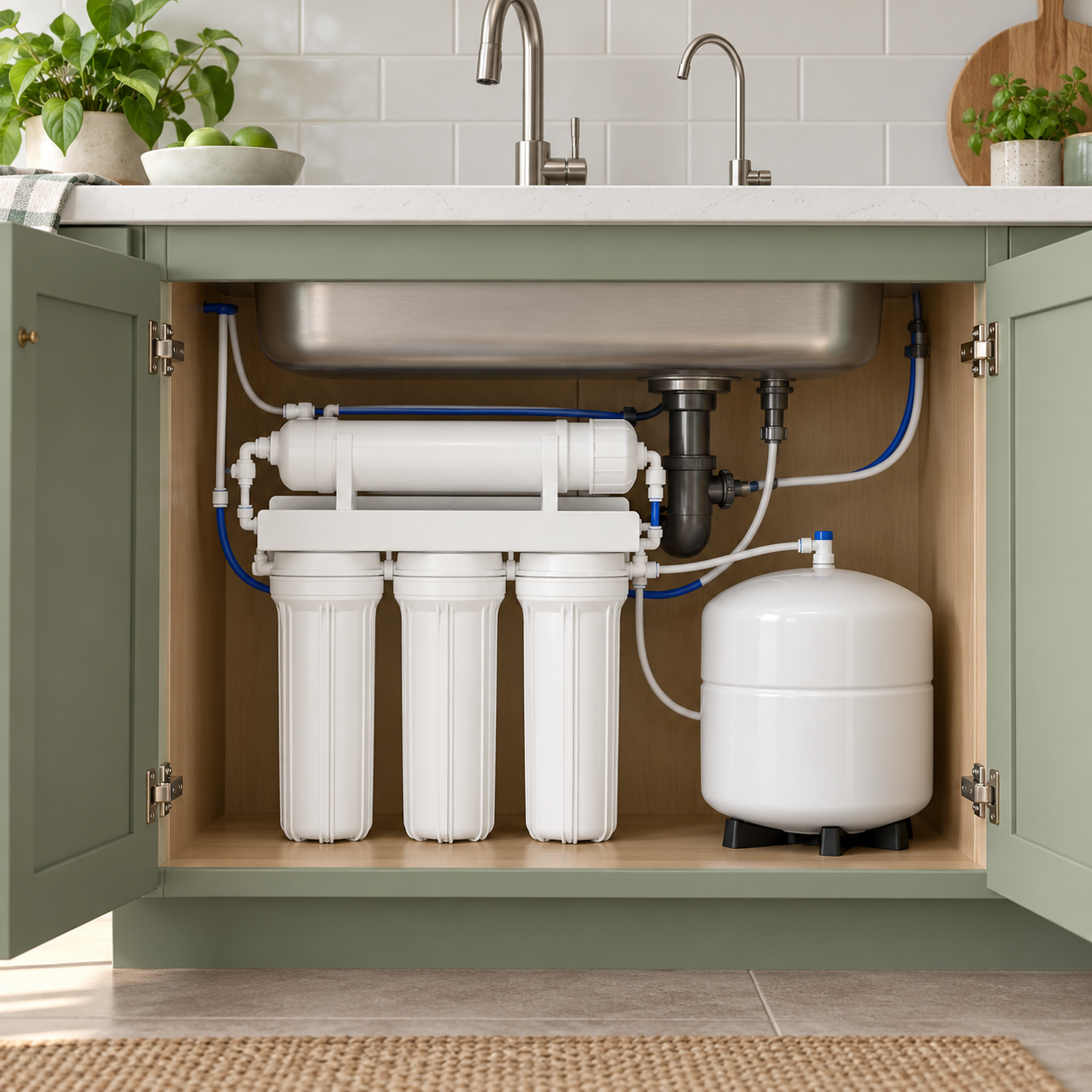
They have four to seven stages (a three-stage is a four-stage). Stage = filters.
I have one of these at the moment and have been with it for a while.
- Filter 1: Sediment prefilter, 3–5 micron
- Filter 2: Granular activated carbon filter
- Filter 3: Carbon block filter
- Filter 4: Reverse osmosis membrane
- Filter 5: Post-carbon (taste-polishing cartridge)
- Filter 6: Mineralising cartridge
- Filter 7: Can be a UV steriliser or negative ioniser. You could have both and have an eighth filter if you wanted.
You will read lots of for-and-against arguments about RO systems, but this is because of the minerals (as well as everything else) they remove from the water, leaving it slightly acidic. Firstly, with a balanced diet, minerals aren’t as important in water, as you’ll get them from food or supplementation. You can treat the acidity by adding lime or other natural alkaline treatments to the water. But if you buy a six- or seven-stage filter, this should come with a remineraliser, which takes care of this issue.
Seven-stage filters can also come with an ionising cartridge, which I like and makes the water taste great.
These are surprisingly cheap but take a little more setting up (£130–£350, depending on make).
A pump may be needed to optimise the RO filter, depending on GPD (gallons per day). As this works with a cylinder that fills with filtered water, if you have a family, it will want to keep filling it when empty. A pump does this much faster and keeps the tank pressurised. Plus, the RO filter has an optimal operating pressure, which the pump will supply.
Replacement filters are cheap. Replacement intervals depend on the cartridge, usage and manufacturer’s instructions.
£25–£45 for sets of filters, depending on the brand and number of filters: five-, six- or seven-stage.
Water distillers
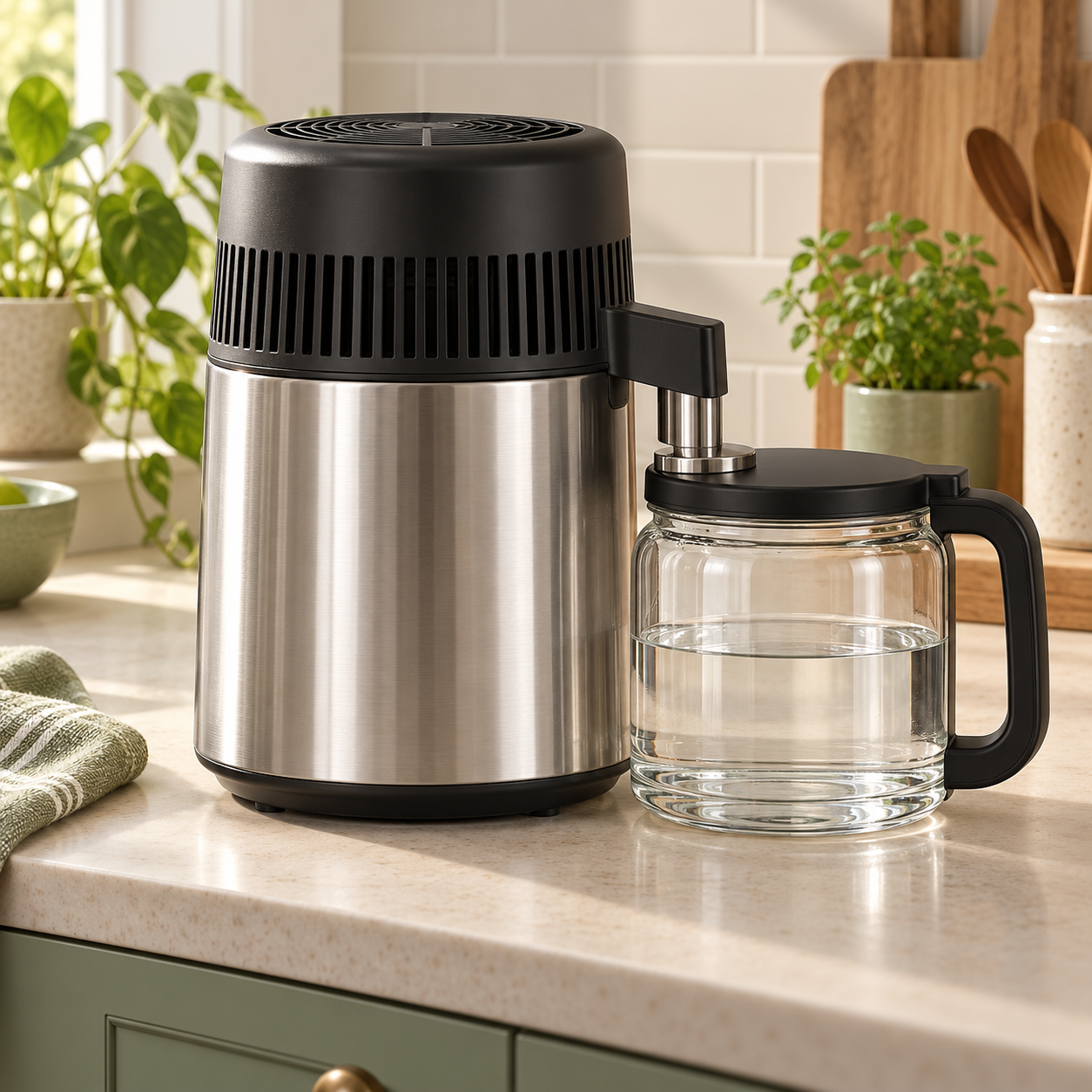
These are by far the easiest water filters to use and maintain and probably the most efficient; they use steam, which is then collected in another jug, and they’re pretty cheap to buy (cheaper models around £60–£130).
The water from these needs re-mineralising and can be a bit acidic because of the treatment. But you can do this yourself with things like:
- Mineral drops
- Himalayan or sea salt
- Mineral stones
I’ve found these to have great-tasting water with the carbon filter bags in place. I say this because I’ve known people to run these without the filters, and it’s not very tasty in my opinion. So check to see if a bag is in.
Below are some good examples and places to purchase these home filters. Also, I would get the glass container jugs.
Water pitchers I like
Value and filtration
Best filtering using five-stage ion resin filters
ZeroWater 10 Cup 2.4 Litre Water Purifier Filter Jug
Value pitcher, decent filters
Waterdrop PT-04C Chubby Water Filter Jug, 3.5L
Non-plastic pitcher
Aarke Purifier Water Filter Jug in Glass and Stainless Steel 2.4L
Non-plastic counter top
Santevia Glass Water Filtration System
Gravity water filter systems
This is just one of four sizes: 1, 6, 8.5 and 12 litre models, and also an 8.5 litre enhanced model which has four filters.
British Berkefeld
British Berkefeld 6L Ultra Sterasyl Gravity Water Filter System
A high-quality, stainless steel, cheaper alternative
Weeplow Earth ECO Gravity Water Filter System
Budget 11-litre gravity filter: great build, water-level window and stand. But being cost-effective, filters might not live up to the two above. Some replacement cartridges may fit, but check compatibility with your system first.
Under-counter filters
I’ll put links to the two companies I know and use. This style of filter unit is a standard, and the cartridges and parts (pipes, connecters ) are sold by lots of different companies so you get the best deals. Certain brands tie you into their own ecosystem, and I find their multi-stage single filters don’t last very long in my experience and your stuck with that unit.
You will need a water supply of at least 40–50 psi. The ideal pressure is around 70 psi, so I would advise a pump, but if you have around 50 psi or more, you can get away without one.
The sixth stage is a remineraliser.
With pump
iSpring Reverse Osmosis System, 6-Stage, 75 GPD, pH+, with Pump
Without pump
iSpring Reverse Osmosis System, 6-Stage without pump
Budget-friendly
Geekpure 5 Stage Reverse Osmosis RO Drinking Water Filter System, 75 GPD, with 7 replacement filters
Water distillers to consider
All I recommend have glass containers; I stay away from plastics as much as I can when it comes to heat, and the water comes out boiling as it’s steam.
Hanchen
Hanchen Water Distiller 304 Stainless Steel 750W
Budget-friendly version
VIVOHOME Water Distiller 4L BPA Free Countertop 304 Stainless Steel
With all these products, you need to keep an eye on how the filters are working, as water supplies differ; filters wear out at different rates, and there’s no point in having a filter if it’s not working. A contaminated filter can cause more problems than having no filter at all. I recommend getting a TDS meter to check that your filters are working and not wearing out or just faulty. I’ll add a link to one I consider reliable. These meters do need calibrating from time to time, but you can find all the info you need online. I might even do an article soon on using and maintaining a meter, as it’s an important part of a water system.